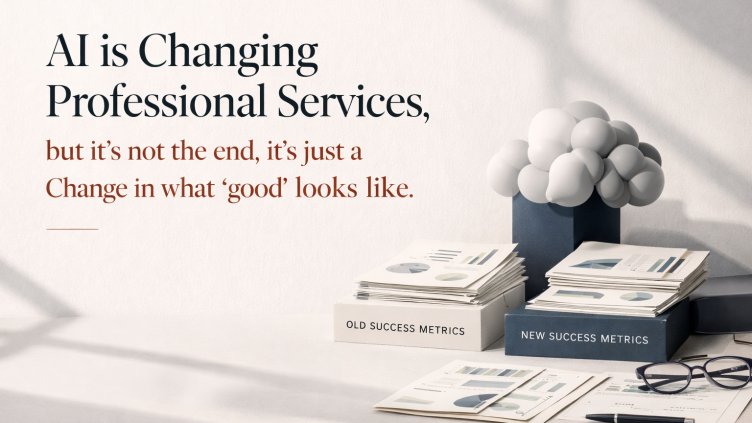
AI is Changing Professional Services, but it's not the end, it's just a Change in what 'good' looks like.
The conversation around AI in professional services has become so polarised that it is no longer especially useful. One half of LinkedIn says AI will replace consulting entirely. The other half says it's a productivity tool with polish. Neither is accurate, and neither helps anyone actually running a services firm make decisions in 2026. Here's what I'm seeing, from the inside of the space and in conversations with operators.
𝗪𝗵𝗮𝘁 𝗔𝗜 𝗶𝘀 𝗮𝗰𝘁𝘂𝗮𝗹𝗹𝘆 𝗱𝗼𝗶𝗻𝗴 𝗶𝗻𝘀𝗶𝗱𝗲 𝘀𝗲𝗿𝘃𝗶𝗰𝗲𝘀 𝗳𝗶𝗿𝗺𝘀 𝘁𝗼𝗱𝗮𝘆
Four use cases dominate across the organisations I talk to.
- 𝗥𝗲𝘀𝗲𝗮𝗿𝗰𝗵 𝗮𝗰𝗰𝗲𝗹𝗲𝗿𝗮𝘁𝗶𝗼𝗻. Summarising reports, extracting signals from transcripts, pulling themes out of customer interviews. What used to be 2-4 hours of analyst time is now 15-30 minutes of directed AI use plus a review. The quality is not perfect, but it's good enough for first drafts and internal briefings.
- 𝗗𝗼𝗰𝘂𝗺𝗲𝗻𝘁 𝗱𝗿𝗮𝗳𝘁𝗶𝗻𝗴. Proposals, reports, memos, internal analyses. The structure gets drafted by AI; the consultant edits, sharpens and adds the judgment that actually differentiates the output. The time save is real - often 50-70% on first-draft work.
- 𝗖𝗼𝗱𝗶𝗻𝗴 𝗮𝗻𝗱 𝗮𝘂𝘁𝗼𝗺𝗮𝘁𝗶𝗼𝗻. Not just for data teams. Consultants in finance, operations and strategy now routinely use AI to write code, sql, pivot data, build scripts, draft regex. Tasks that used to require an analyst are now done by the senior directly.
- 𝗖𝗹𝗶𝗲𝗻𝘁-𝗳𝗮𝗰𝗶𝗻𝗴 𝗮𝘀𝘀𝗶𝘀𝘁𝗮𝗻𝘁𝘀. Knowledge bases that clients can query and chat interfaces on engagement dashboards. Not yet widespread, but growing fast in larger engagements.
⠀
𝗧𝗵𝗲 𝗽𝗿𝗶𝗰𝗶𝗻𝗴-𝗺𝗼𝗱𝗲𝗹 𝗽𝗿𝗲𝘀𝘀𝘂𝗿𝗲
Here's the uncomfortable part. If a task that used to bill 4 hours now takes 45 minutes, your billable revenue on that task drops by ~80%. Multiply across a firm and T&M pricing starts to erode faster than productivity gains compensate. Organisations are responding in three directions.
- 𝗢𝘂𝘁𝗰𝗼𝗺𝗲-𝗯𝗮𝘀𝗲𝗱 𝗽𝗿𝗶𝗰𝗶𝗻𝗴. Charge for the result, not the hours. A strategic review delivers the same output; the firm keeps the margin AI creates. Easier said than done - outcome pricing needs disciplined scoping and comfortable risk appetite.
- 𝗩𝗮𝗹𝘂𝗲-𝗯𝗮𝘀𝗲𝗱 𝗽𝗿𝗶𝗰𝗶𝗻𝗴. Charge for the impact, not the effort. A cost-reduction project priced at 10-15% of the realised saving, rather than at a day rate. Works well for specific engagement types; doesn't replace T&M everywhere.
- 𝗥𝗮𝘁𝗲 𝗰𝗼𝗺𝗽𝗿𝗲𝘀𝘀𝗶𝗼𝗻 𝘄𝗶𝘁𝗵 𝘃𝗼𝗹𝘂𝗺𝗲. Keep T&M but bill more engagements per consultant. Requires the firm to scale pipeline proportionally - which isn't always possible. None of these is a complete answer. Firms will run hybrid models for the next few years.
⠀
𝗧𝗵𝗲 𝗻𝗲𝘄 𝘀𝗲𝗿𝘃𝗶𝗰𝗲 𝗰𝗮𝘁𝗲𝗴𝗼𝗿𝗶𝗲𝘀
AI is also growing the pie. Three categories are expanding quickly.
- 𝗔𝗜 𝗶𝗺𝗽𝗹𝗲𝗺𝗲𝗻𝘁𝗮𝘁𝗶𝗼𝗻 𝗮𝗱𝘃𝗶𝘀𝗼𝗿𝘆. Helping clients figure out what to do with AI in their own business. Low technical barrier, high strategic value.
- 𝗔𝗜 𝗴𝗼𝘃𝗲𝗿𝗻𝗮𝗻𝗰𝗲 𝗮𝗻𝗱 𝗽𝗼𝗹𝗶𝗰𝘆. Data protection, bias audit, model risk management. Regulated industries are spending here heavily.
- 𝗔𝗜-𝗲𝗻𝗮𝗯𝗹𝗲𝗱 𝘄𝗼𝗿𝗸𝗳𝗹𝗼𝘄 𝗿𝗲𝗱𝗲𝘀𝗶𝗴𝗻. Redesigning processes around AI-assisted execution. This is where the most interesting margin sits - because it's genuinely new work.
⠀
The operational shifts in organisation shape.
Several years from now, the typical mid-market services firm will look structurally different.
- Fewer junior analysts.
- More senior generalists who can direct AI tools productively.
- Bench management shifts - the marginal cost of adding a person has risen, because AI-enabled seniors can do more.
- Engagement staffing shrinks on average; the shape becomes more barbell (senior-heavy, tool-leveraged) than pyramid.
- Utilisation targets will drift up, because AI reduces non-billable overhead (internal research, knowledge management, routine reporting). 80% utilisation starts to look sustainable in ways it didn't before.
- Training shifts. New joiners need to learn AI prompt discipline, AI output verification and tool selection as core skills. The mentorship model changes, because senior-to-junior time transfer is partially replaced by senior-to-AI.
⠀
𝗧𝗮𝗸𝗲𝗮𝘄𝗮𝘆
AI isn't the end of professional services. It's a rebase of what 'good' looks like. Organisations that move early on pricing models, skill mix and delivery methodology will see margin lift. Firms that treat AI as 'just a productivity tool' will see gradual competitive erosion, not dramatically, but cumulative over the coming years. The honest middle is more interesting than the hype or the doom. The question isn't whether AI will change services. It's which side of the change your organisation is planning to be on. Thanks for reading.
Explore the platform: Avaro One | Integrated CRM + PSA Platform